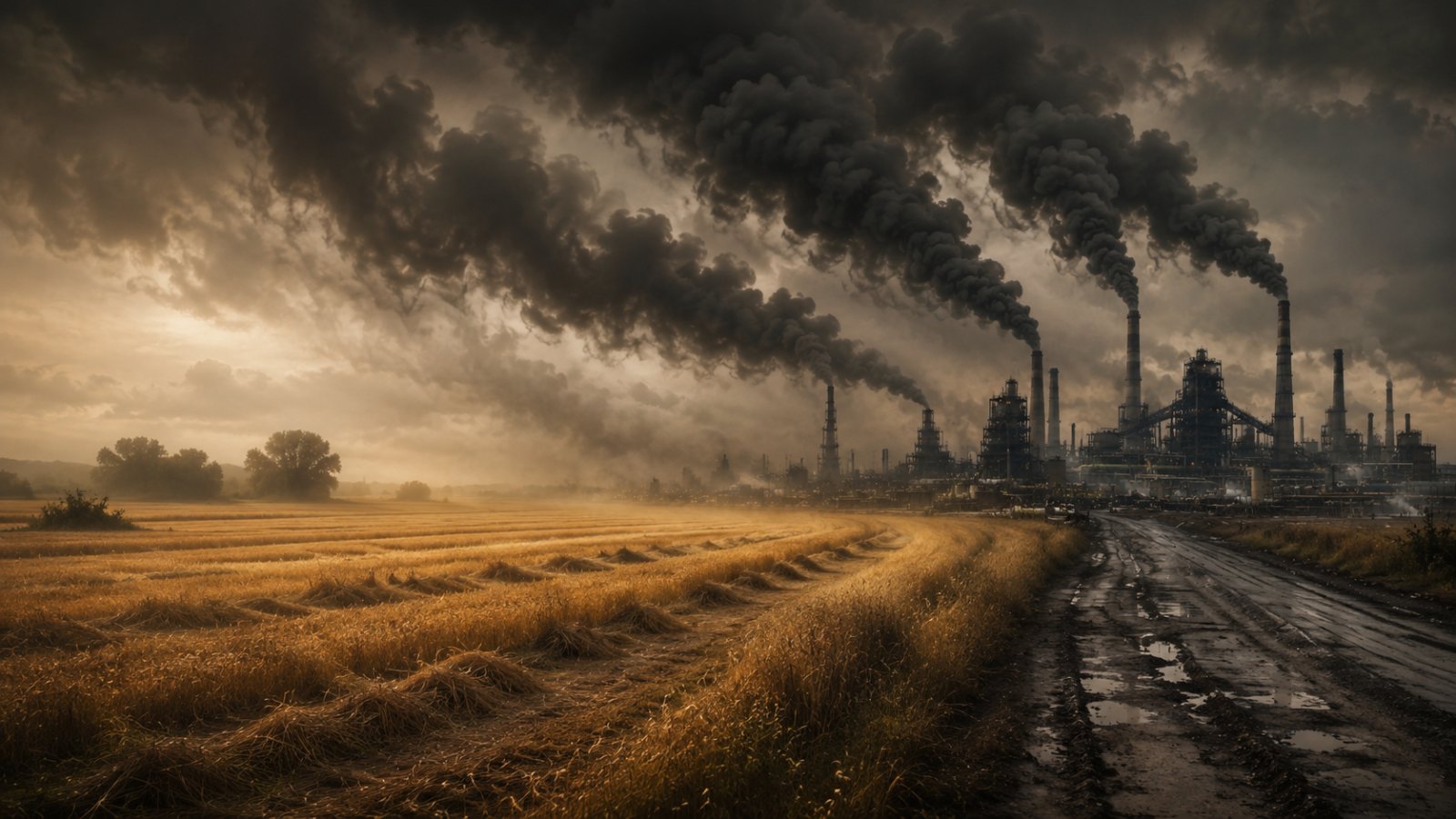
A foreign-government-owned company wants to build the biggest aluminum smelter in the country on 350 acres at the Port of Inola — right on the Verdigris River, in the middle of what people here have called the hay capital of the world. Smelting aluminum from raw ore is one of the dirtiest, most power-hungry industrial processes there is. Here is what that actually means for the people who live next to it.
01
Foreign-owned.
Oklahoma-polluting.
The smelter is a joint venture called Oklahoma Primary Aluminum. Sixty percent of it belongs to Emirates Global Aluminum — a company owned by the government of the United Arab Emirates. Century Aluminum holds the other forty. Oklahoma has put more than $250 million in taxpayer incentives on the table to bring it here.
02
Our air.
Our river.
The air permit application projects roughly 425 tons of hydrogen fluoride a year — a substance the EPA classifies as extremely hazardous — alongside sulfur dioxide, nitrogen oxides, and fine particulates carrying heavy metals, venting from seventeen-plus stacks around the clock. The plant sits directly on the Verdigris River.
03
Our land.
Our livelihood.
Fluoride does not wash off. It settles on forage, cattle eat fifty-plus pounds of it a day, and it builds up permanently in bone — worn teeth, lameness, deformities, failed pregnancies. In 1979 a smelter emitting about 300 tons a year collapsed herds within five miles on Cornwall Island. Inola is permitted for 425.